
Businesses increasingly depend on external parties such as suppliers, customers, distributors, lenders, insurers, logistics providers, and strategic partners. These relationships support growth, but they also create financial and operational exposure when a counterparty fails to meet its obligations.
Counterparty risk management is the process of identifying, assessing, and monitoring the risks associated with organizations that a business depends on financially or operationally. It helps companies understand whether a counterparty can meet its contractual, payment, and business commitments.
For banks, NBFCs, fintech companies, insurers, and large enterprises, effective counterparty risk management is becoming an important part of credit assessment, vendor due diligence, trade finance, and ongoing business monitoring.
What Is Counterparty Risk Management?
Counterparty risk management involves evaluating the financial strength, business stability, ownership, compliance position, and other relevant risk indicators of an external organization.
A counterparty may include:
Customers and buyers
Suppliers and vendors
Distributors
Business partners
Borrowers
Corporate guarantors
Financial institutions
Insurance counterparties
Trade and supply chain partners
The objective is to understand the potential impact if a counterparty delays payments, defaults on an obligation, becomes financially distressed, or faces a significant legal or regulatory event.
Rather than relying on a single credit score, organizations can combine financial, corporate, legal, and operational information to develop a more complete risk profile.
Why Counterparty Risk Management Matters
A counterparty can become risky even when its previous business performance appears stable. Financial conditions, ownership, management, regulatory status, and market circumstances can change quickly.
Protecting Cash Flow
Delayed payments from a major customer can create working-capital pressure. Monitoring counterparty financial health helps businesses identify potential payment risks earlier.
Reducing Concentration Risk
A company may depend heavily on a small number of customers or suppliers. Counterparty analysis can highlight these dependencies and support more balanced exposure management.
Supporting Better Credit Decisions
Banks and NBFCs need to understand not only the borrower but also important business relationships that influence repayment capacity.
Strengthening Vendor Management
A financially weak or non-compliant supplier can disrupt operations, create contractual issues, or affect a company's reputation.
Key Components of Counterparty Risk Management
A comprehensive approach should combine different types of business intelligence rather than evaluating counterparties through financial information alone.
Financial Risk Assessment
Review revenue trends, profitability, liquidity, leverage, cash flow, debt exposure, and other financial indicators. Changes over multiple reporting periods can be more informative than a single year's performance.
Ownership and Management Analysis
Director, promoter, shareholder, and ownership information can reveal relationships between companies and identify significant management or control changes.
For example, a sudden change in directors at a critical supplier may warrant additional review before renewing a long-term contract.
Legal and Compliance Checks
Litigation, regulatory actions, corporate filings, charges, and compliance events can provide important signals about a counterparty's current position.
Business Relationship Analysis
Understanding how a counterparty connects with customers, suppliers, group companies, and other entities can reveal concentration, dependency, or interconnected exposure.
Operational Risk Indicators
Organizations should also consider factors such as business continuity, industry conditions, supply dependencies, and significant changes in commercial activity.
How Counterparty Risk Management Works
A practical counterparty risk management process can follow five stages.
1. Identify the Counterparty
Create a clear record of every important external organization and its relationship with the business.
2. Establish the Risk Profile
Collect financial, ownership, compliance, legal, and business information to establish an initial risk profile.
3. Set Exposure Limits
Use the assessment to determine appropriate credit limits, payment terms, supplier exposure, or contractual controls.
4. Monitor Material Changes
Track important events that could change the counterparty's risk profile.
5. Review and Act
When significant warning signals appear, teams can investigate further, adjust exposure, request additional safeguards, or reconsider the relationship.
Role of Technology in Counterparty Risk Management
Managing hundreds or thousands of counterparties manually can create inconsistent reviews and delayed responses. A technology-enabled counterparty risk management system can consolidate information and automate important monitoring activities.
Modern platforms can support:
Automated business verification
Financial trend analysis
Ownership and director monitoring
Litigation and compliance checks
Relationship and linkage analysis
Risk alerts and early warning signals
Portfolio-level exposure monitoring
Centralized counterparty records
This creates a more continuous approach to risk management instead of relying exclusively on periodic reviews.
Practical Example
Consider a large manufacturer that relies on a critical component supplier. The supplier has maintained a good payment and delivery record for several years. During ongoing monitoring, however, the manufacturer identifies declining financial performance, increased debt exposure, and changes in the supplier's ownership structure.
None of these signals alone necessarily means the supplier will fail. Together, however, they justify a closer review.
The manufacturer could reassess purchasing concentration, review alternative suppliers, adjust contractual safeguards, and monitor the supplier more closely. This illustrates how counterparty risk management can support preventive action rather than simply responding after a disruption occurs.
Counterparty Risk Management for Financial Institutions
For banks, NBFCs, and fintech lenders, counterparty risk extends beyond direct borrowers. Guarantors, anchor companies, suppliers, distributors, and other connected businesses can influence the overall exposure.
A lender can combine counterparty risk assessment, credit analysis, business intelligence, and portfolio monitoring to identify relationships that may increase exposure.
For example, if multiple borrowers depend on the same financially stressed buyer, the lender's actual portfolio exposure may be higher than what individual borrower assessments indicate.
How Credhive Supports Counterparty Risk Management
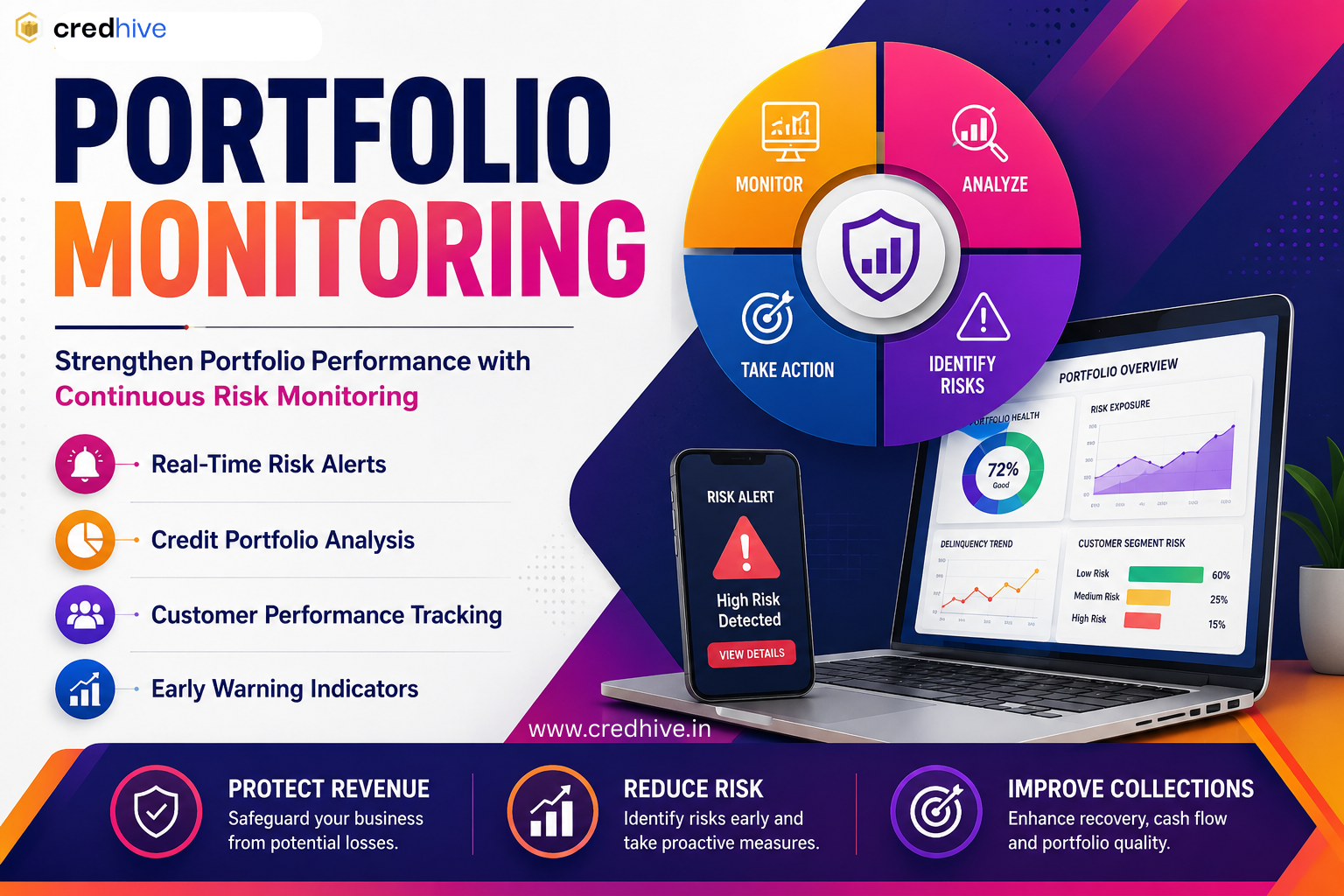
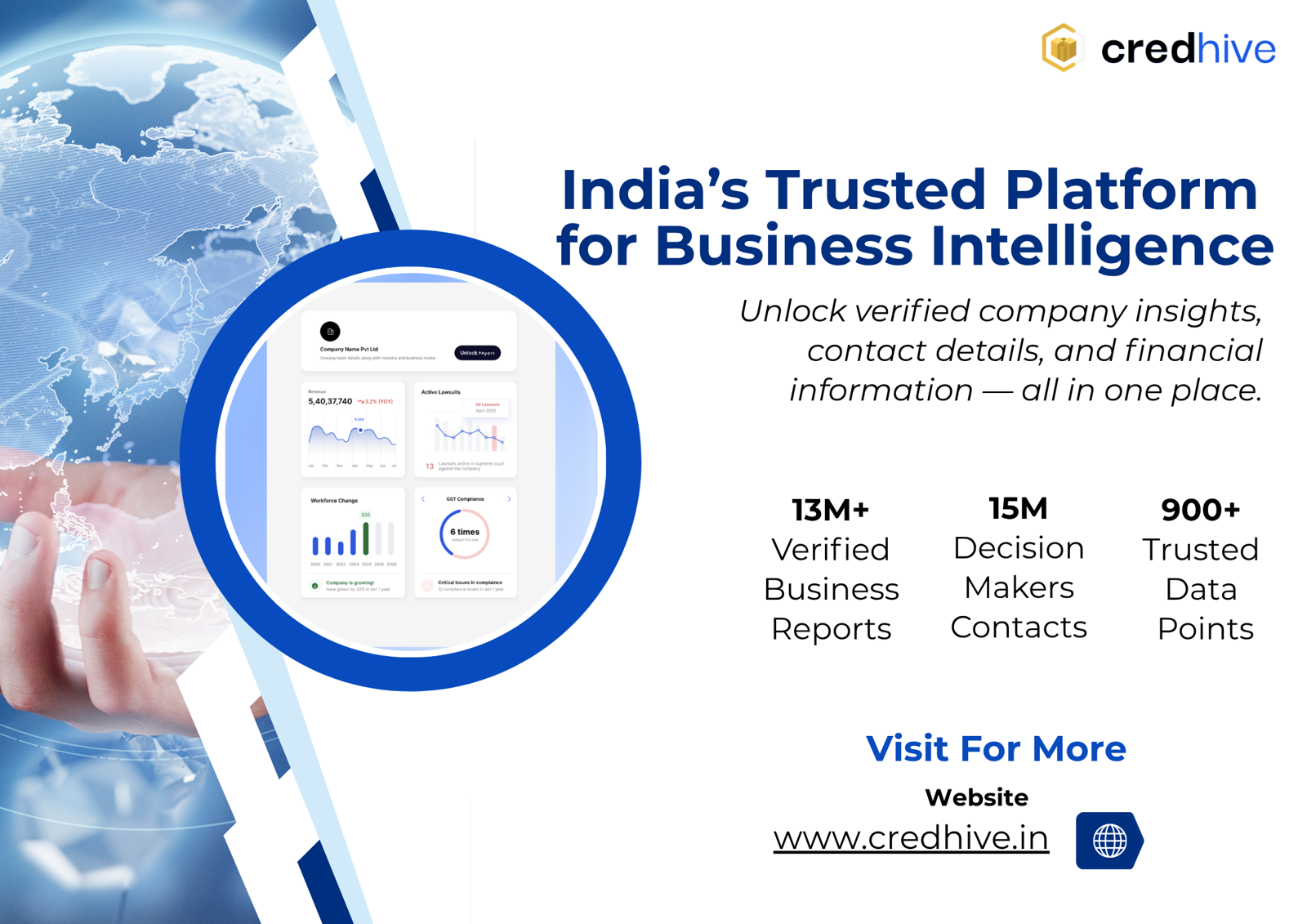
Credhive provides financial and business intelligence that can support counterparty risk management across lending, procurement, trade finance, and corporate risk functions. Its Credit Decision Engine, Business Information Reports, Portfolio Monitoring, MCA filings, GST information, litigation records, financial trends, director linkages, compliance intelligence, and early warning signals help teams develop a broader view of business risk.
By bringing multiple risk indicators into a unified workflow, Credhive can support initial counterparty assessment as well as ongoing monitoring of important business relationships.
Best Practices for Counterparty Risk Management
Maintain Current Counterparty Data
Keep financial, ownership, compliance, and business information updated rather than relying on outdated onboarding records.
Use Risk-Based Monitoring
Monitor critical or high-exposure counterparties more frequently than low-risk relationships.
Track Early Warning Signals
Watch for financial deterioration, management changes, litigation, compliance issues, and unusual business activity.
Assess Connected Exposure
Look beyond individual counterparties to identify common customers, suppliers, group entities, or other relationships that may create concentration risk.
Define Clear Response Procedures
Establish what actions should follow when significant counterparty risk indicators are identified.
Frequently Asked Questions
What is counterparty risk management?
Counterparty risk management is the process of assessing and monitoring organizations that a business depends on for financial, contractual, or operational commitments.
What is included in a counterparty risk assessment?
It may include financial performance, ownership, management, legal records, compliance status, business relationships, and other relevant risk indicators.
Why is counterparty monitoring important?
Continuous monitoring helps organizations identify material changes in a counterparty's financial or business position before they significantly affect exposure.
How can technology improve counterparty risk management?
Technology can consolidate business data, automate verification, monitor changes, generate alerts, and provide centralized visibility across multiple counterparties.
Is counterparty risk relevant only to financial institutions?
No. Banks and NBFCs face significant counterparty exposure, but manufacturers, enterprises, insurers, procurement teams, and supply chain businesses also need to manage counterparty risk.
Conclusion
Counterparty risk management helps organizations move from periodic background checks toward a more structured and continuous approach to business risk. By combining financial analysis, ownership intelligence, legal and compliance checks, relationship analysis, and ongoing monitoring, organizations can better understand the parties they depend on.
For businesses managing significant customer, supplier, lending, or trade exposure, a data-driven counterparty risk management process can support stronger due diligence, earlier risk detection, and more informed decisions throughout the business relationship.

Write a comment ...